

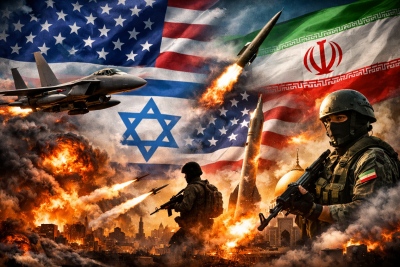
At a time when Iran demonstrates its resolve to strike back not proportionally, but exponentially against military hits by US forces, the American war machine is reaching its absolute operational limits. US forces cannot endure a prolonged war; stocks of missiles and munitions are being depleted to the point where defending the homeland itself has become shockingly vulnerable. This exact warning is being delivered by top military leadership to Secretary of Defense Pete Hegseth and President Trump. Generals and admirals warn that sustaining the war at this intensity is unsustainable, and the toll is not paid solely in the Middle East: it erodes the capacity of the US to respond simultaneously in Europe, the Pacific, and even defend US territory itself. The core message to the Pentagon is becoming impossible to ignore: the war with Iran is consuming forces, military assets, and time faster than Washington can replenish them.
Shock warning
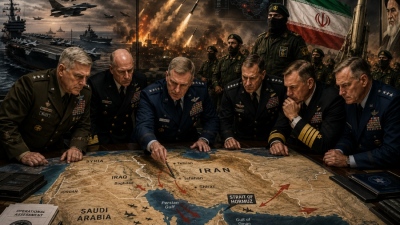
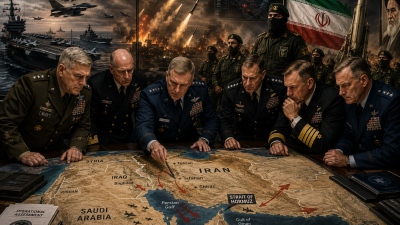
Several senior US military leaders have warned Secretary of Defense Pete Hegseth that extending large-scale operations against Iran is unsustainable and risks crippling their capacity to counter threats on other fronts, including within the homeland, according to individuals familiar with a recent assessment prepared for the Pentagon chief. According to a report by the Washington Post, these warnings—presented to Hegseth by the chiefs of the Army, Navy, and Air Force, alongside four-star commanders overseeing US operations in Europe, Asia, and Latin America—are contained in the August 14 edition of the Secretary of Defense Orders Book (SDOB), according to the same sources. The sources described the assessment on condition of anonymity because the document remains strictly classified.
What the report details
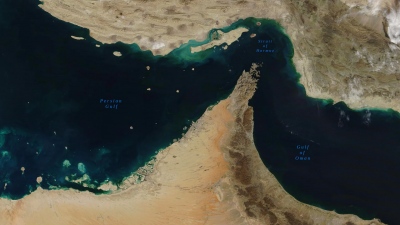
The SDOB, which is typically issued twice a month, tracks the global availability of US warships, aircraft, personnel, and weapons systems. It reflects presidential priorities for the Armed Forces implemented by the Secretary of Defense, incorporating evaluations from top generals and admirals that directly shape Pentagon operational orders. As Trump pressures Tehran to reopen the Strait of Hormuz and accept a series of US terms to resolve the stalled conflict, he maintains that all options remain on the table—including fresh military strikes.
50,000 troops on high alert
Consequently, U.S. Central Command, the combatant command responsible for prosecuting the war against Iran, has maintained more than 50,000 troops on high alert for months in the event the president orders new strikes. The August 14 SDOB orders certain deployed forces in the Middle East to stay through September, while directing others to remain until 2027. The prospect of further extending these deployments prompted senior military leaders to formally air their severe concerns.
Open disagreement with Hegseth
The heads of U.S. European Command, U.S. Pacific Command, and U.S. Southern Command, alongside the Navy's top admiral, responded with what the SDOB terms a "non-concur"—formally registering their disagreement with the Secretary's order to extend deployments, while committing to execute it nonetheless. American commands overseeing regional operations in Europe, Asia, and Latin America have seen their ships, aircraft, and key equipment diverted to support Middle East military operations. This redirection has severely constrained their ability to execute primary missions and maintain adequate training regimens for unit personnel.
Navy stretched to the brink
The Navy in particular has been forced to drain its capabilities to meet wartime demands. Leadership within the Army and Air Force aligned with Hegseth's intent to extend force deployments, yet both service branches highlighted that such extensions carry substantial operational risk. Overall, the military leadership's collective message is that the campaign against Iran—now hitting the six-month mark—has lasted "far too long at far too high a cost," according to a source familiar with the evaluation. This previously undisclosed warning from military chiefs to Hegseth provides a candid look at the administration's strategic dilemma: Trump aims to conclude the war on terms favorable to the US, while Iran—aware of waning American public support and shrinking US weapons stockpiles—refuses to capitulate.
A grim outlook
The SDOB serves as a formal channel for top commanders to flag critical resource constraints and inform Hegseth how acquiring or losing military assets impacts strategic goals. A source familiar with the assessment noted that while risk discussions among commanders are standard practice, the current outlook is undeniably "far grimmer." Certain generals and admirals were unusually explicit and blunt, telling Hegseth directly that they non-concurred with orders to keep committing personnel and hardware while the long-term trajectory of the war remains undefined.
US homeland defense left vulnerable
Top commanders from European Command and Southern Command warned Hegseth that transferring surveillance aircraft and warships to Central Command has severely degraded their ability to meet homeland defense obligations. Adm. Samuel Paparo, head of Pacific Command, formally non-concurred with the continuous support demanded of his theater, which includes committing an aircraft carrier strike group and multiple guided-missile destroyers. Adm. Daryl Caudle, Chief of Naval Operations, delivered the most alarming assessment in the SDOB, warning Hegseth that the Navy cannot sustain its current operational tempo in the Iran war without a clear end date.
Only one-quarter of destroyers deployment-ready
The Navy has absorbed a staggering operational burden. It has been required to commit dozens of combat vessels to the campaign—initially participating in offensive strikes and defensive interceptions against Iranian retaliation, and subsequently enforcing Trump's ordered maritime blockade of Iranian ports to force open the Strait of Hormuz. Deployments for numerous ships and crews have been extended by several months. Caudle informed Hegseth that only about one-quarter of the Navy destroyer fleet remains ready for deployment, a sharp drop compared to pre-war readiness levels. More broadly, the document warns that deferred maintenance caused by endless operational demands threatens global fleet availability if additional major conflicts erupt.
Arduous mission demands
At a recent event in Norfolk, Caudle described deployment extensions as "extremely hard on our sailors." He remarked: "Normally, I am completely opposed to extensions and push back hard, but the enemy gets a vote in how events unfold." While Army and Air Force leadership agreed with Hegseth's current trajectory, they acknowledged the severe strain imposed. Elements of the Army's 82nd Airborne Division, which deployed 2,000 soldiers in March as part of the initial war response, will see their deployments extended up to a full year, according to a letter issued by division commander Maj. Gen. Brandon R. Tegtmeier. Addressing the division community, the letter acknowledged the hardship of ongoing uncertainty, noting that leadership "understands that an extended mission places a heavy burden on every family, including our own." These specific forces would play a central role in any potential ground invasion of Iran.
Running out of Patriot, THAAD interceptors
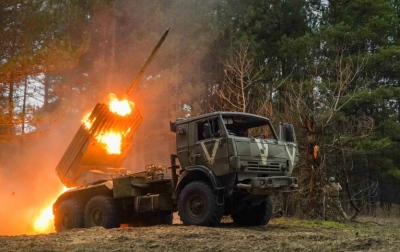
Deployments for units operating Army Patriot air defense systems—crucial for intercepting incoming missiles and drones targeting US facilities—are also slated for extension. Severe depletion of Patriot missile interceptors—driven by intense usage against Iran alongside prior transfers to Ukraine—has restricted the Trump administration's ability to escalate the conflict, even as Tehran retains the capacity to hit US targets across the region. The war has also heavily depleted US inventories of THAAD (Terminal High Altitude Area Defense) interceptors—vital for protecting both US bases and regional allies—as well as long-range Tomahawk cruise missiles. Roughly 25% of the Pentagon's Reaper drone fleet has been destroyed, while US regional facilities have sustained billions of dollars in structural damage. The Trump administration maintains that reports of critical ammunition supply shortages are inaccurate.
Operations projected into 2027
Numerous Air Force squadrons deployed to the Middle East for round-the-clock bombing runs and combat operations are also projected to stay deployed through 2027. The recent formal non-concurs registered by senior officers mark the latest in a series of solemn warnings from military leadership regarding the campaign. Prior to the outbreak of hostilities, Gen. Caine warned the White House that the US lacked sufficient munitions—and adequate allied support—to sustain a prolonged, large-scale military campaign.
Israel and US homeland left exposed to missile strikes
More recently, Gen. Alexus Grynkewich, head of European Command, privately alerted the Pentagon that he lacks adequate naval assets to shield Israel and the US homeland from missile attacks. In the Indo-Pacific, key US allies have voiced growing alarm that depleted Pentagon missile and interceptor stocks leave them increasingly vulnerable against China. The Navy's only aircraft carrier permanently homeported in the Pacific—a cornerstone of US Indo-Pacific deterrence against Beijing—was redirected to the Middle East to relieve another carrier that had already been deployed for over 300 consecutive days.
Iran responds with exponential counterstrikes
Following the US strike on two missile launchers on Larak Island, Iran retaliated with massive counterstrikes against US bases in Jordan and the United Arab Emirates, while a supertanker was hit in Hormuz and another American MQ-9 drone was shot down. It is increasingly clear that Iran is abandoning its policy of proportional retaliation, shifting toward sustained offensive operations featuring multi-directional barrages aimed at US military installations.
Hossein Mohammadi (IRGC): A "strategic error" by Trump
Brigadier General Hossein Mohammadi, spokesman for the Islamic Revolutionary Guard Corps, labeled the US strike on Larak Island a "strategic and fatal error by the Trump administration within its broader economic war." According to Mohammadi, the move will permanently alter the regional balance of military power to Washington's detriment and carry severe operational fallout.
Iranian Foreign Ministry: Decisive response to any new military attack
Iran announced it will respond decisively to any new military aggression, emphasizing that the United States and any nations supporting its actions bear full responsibility for further escalation. In an official statement, Iran's Foreign Ministry confirmed that national armed forces targeted US bases in Jordan specifically in retaliation for the strike on Larak Island. The ministry asserted that those US military bases in Jordan were directly utilized to launch and support the Larak operation, which resulted in military and civilian casualties.
Pezeshkian (Iranian President): We do not seek war but will not remain passive to attacks
For his part, Iranian President Masoud Pezeshkian declared that Tehran "does not seek war," but "will not remain passive" in the face of continued US strikes. "We do not seek war, and that is a clear message we have delivered to the international community. However, in the face of any aggression, we will never stand idly by and will deliver a decisive response to any aggressor," emphasized the Iranian president, who is scheduled to meet Russian President Vladimir Putin on the sidelines of the Shanghai Cooperation Organization summit in Kyrgyzstan.
Iran's decision to strike Jordan carries deliberate political message
Harlan Ullman, a retired senior US Navy officer, noted that Iran's decision to target installations inside Jordan represents "a calculated political message," regardless of the exact damage inflicted on US forces stationed there. "They are delivering a clear signal to Jordan that it is a target," Ullman said, adding that Iran deliberately selected Jordan over alternative options, such as US facilities in the UAE or Qatar. "It is a target loaded with political significance," he explained, noting that the strike was executed "with clear intent and forethought—not necessarily to maximize casualties among Americans, but to ask the Jordanians: Are you certain you want to continue backing the Americans?"
www.bankingnews.gr







Σχόλια αναγνωστών